– so why don’t more get value from their data?
Let’s start with something that might sound surprising.
Across Europe, a large share of fleets already drive connected vehicles. In fact, around 40 % of companies have connected vehicles in all or part of their fleet. And if you look at new vehicles, the number is even higher: close to 90 % of new cars and vans sold in Europe are technically connected straight from the factory.
So with all that connectivity, you’d expect fleet managers to be swimming in insights.
But that’s not what we see in reality.
Many fleets are connected — yet far fewer are truly data-driven.
Being connected isn’t the same as getting value
For a lot of fleet managers, “connected vehicle” sounds like a solved problem. The vehicle has a modem, data is being generated, job done.
But here’s the catch:
Data existing somewhere is not the same as data helping you make better decisions.
In practice, many fleets struggle with questions like:
Where is the data actually available?
Who owns it?
Can we access it across different vehicle brands?
And most importantly: what should we even use it for?
That gap between “we have data” and “we use data” is where a lot of value is currently lost.
Why fleet data often goes unused
This isn’t about fleet managers being uninterested or behind the curve. It’s usually about very practical obstacles.
1. The data is fragmented
OEM portals, leasing platforms, spreadsheets, separate systems for fuel, service and routing. When data lives in silos, it’s hard to see the full picture — and even harder to act on it.
2. Too much data, too little clarity
Modern vehicles generate huge amounts of information. But more data doesn’t automatically mean better decisions. Without clear KPIs, dashboards quickly turn into noise.
3. Access isn’t always simple
Even though vehicles are connected, access to meaningful data can be limited, delayed or locked behind brand-specific systems. For mixed fleets, this quickly becomes complex.
4. Data isn’t part of daily routines
If insights aren’t reviewed regularly — or don’t clearly link to costs, safety or operations — they tend to get ignored. Not because they’re unimportant, but because day-to-day operations always win.
Where fleets actually see value from data
The fleets that do succeed with vehicle data usually don’t try to do everything at once. They focus on a few areas that directly affect the business:
Costs – fuel or energy use, idling, inefficient routes
Maintenance – fewer breakdowns, better service planning
Safety – risky driving behaviour, fewer incidents
Utilisation – are vehicles used as efficiently as possible?
These are not “nice-to-have” insights. They are things that show up clearly on the bottom line.
And importantly: they don’t require all available data — just the right data, presented in a way that’s easy to understand and act on.
The real opportunity for European fleets
The interesting part is this:
Connected vehicles are becoming the standard, not the exception. But using vehicle data well is still a competitive advantage.
That means fleets that figure out how to turn connectivity into everyday decisions — rather than occasional reports — will be better positioned to:
Control costs
Improve safety
Reduce downtime
Prepare for electrification and reporting requirements
In other words: the technology is already there. The value comes from how it’s used.
How to move from “connected” to “data-driven”
If you’re looking to get more out of the vehicles you already have, a simple approach often works best:
Start with a few clear goals — not dozens of metrics
Bring data together in one place
Focus on insights that lead to action
Make data part of regular fleet discussions, not a side project
You don’t need perfect data. You need useful data.
How EcoLink fits into this
This is exactly the challenge EcoLink is built to solve.
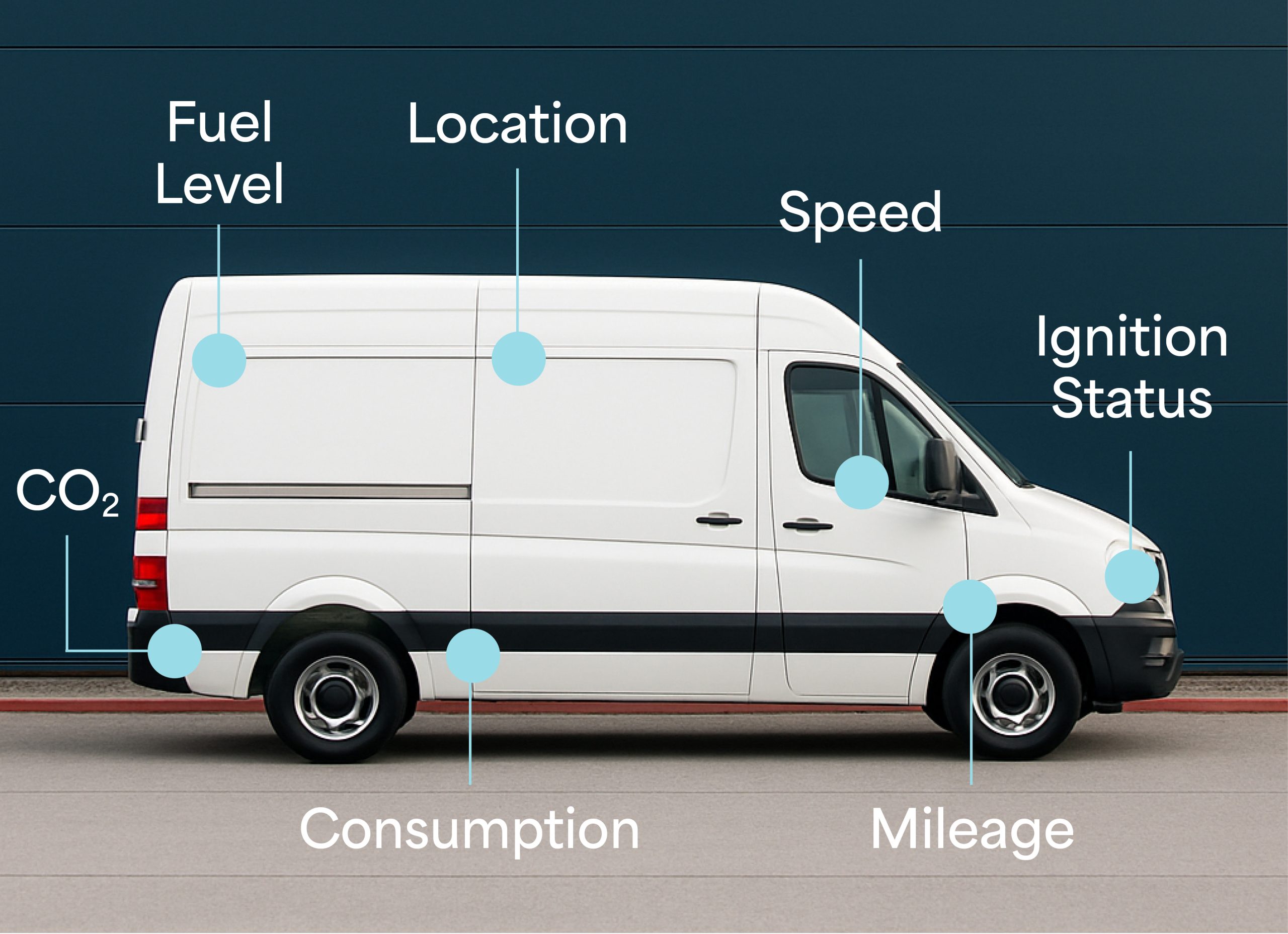
EcoLink connects directly to the vehicle’s built-in technology and turns existing vehicle data into clear, usable insights — without installing hardware, without workshop visits, and without vehicle downtime.
No boxes. No cables. No complexity.
Just the data fleets need to move from connected to data-driven — faster and with less effort.
Curious if your vehicles are compatible? Let’s have a conversation.
Sources:
Copenhagen Economics
Arval