What vehicle data can tell you beyond location
Most fleet tracking starts with one simple question: Where is the vehicle?
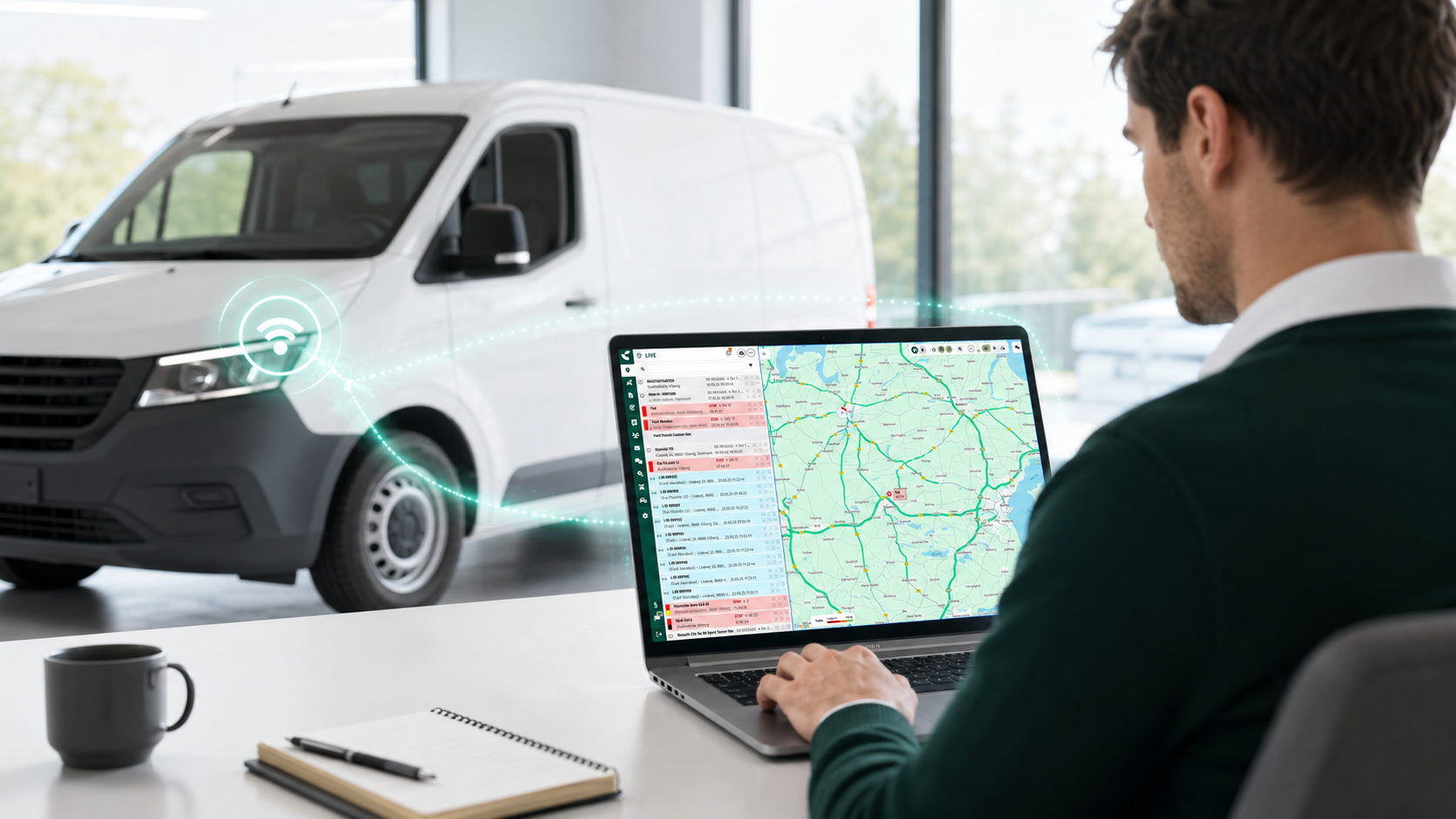
But modern vehicles can provide much more information than location alone.
Depending on the vehicle and connection, businesses can access data such as mileage, fuel or battery level, consumption, ignition status and diagnostic information.
This is where vehicle intelligence becomes valuable: combining location with actual vehicle data to give fleet managers a clearer picture of how their vehicles are being used.
What is vehicle intelligence?
Vehicle intelligence combines tracking data with information coming from the vehicle itself.
Instead of only seeing where a vehicle is, fleet managers may also be able to access information about mileage, consumption, fuel or battery level and other vehicle data.
The available data depends on the vehicle brand, model, year and type of connection.
Get more context around vehicle use
Vehicle data makes it easier to understand what is happening behind the location on the map.
Mileage, consumption and vehicle activity can help fleet managers compare vehicles, identify unusual patterns and understand how individual vehicles are being used.
Rather than relying on assumptions, you get a stronger basis for deciding where attention may be needed.
Support better maintenance planning
Mileage and available vehicle data can help fleet managers keep a closer eye on vehicle use and upcoming maintenance needs.
Instead of treating every vehicle the same, service planning can be based on how much individual vehicles are actually being driven.
Where diagnostic data is available, it can also provide additional information that may help identify issues requiring attention.
Understand fleet utilisation
When vehicle data is available across the fleet, it becomes easier to compare how different vehicles are being used.
Which vehicles cover the most kilometres? Which are rarely used? Are some vehicles consuming noticeably more fuel than comparable vehicles?
These insights can support decisions about vehicle allocation, fleet size and daily operations.
Make decisions based on actual vehicle data
The value of vehicle intelligence is not simply having access to more data. It is being able to use that information when making decisions.
Fleet managers can use vehicle data to investigate fuel consumption, compare utilisation, plan maintenance and identify unusual driving or usage patterns.
The result is a clearer understanding of the fleet and a better basis for deciding what to improve next.
Vehicle intelligence is about seeing more than location
GPS tracking tells you where a vehicle is. Vehicle intelligence adds context about how that vehicle is being used.
By bringing location and vehicle data together, fleet managers can get a clearer picture of mileage, consumption, activity and vehicle performance — all in one place.
Better data does not make the decisions for you. It gives you a stronger basis for making them.
Want access to vehicle data without installing additional hardware?
With EcoLink, compatible cars and vans can connect directly to EcoMobility using their factory-installed connectivity, giving you access to available OEM vehicle data without an additional tracking device.