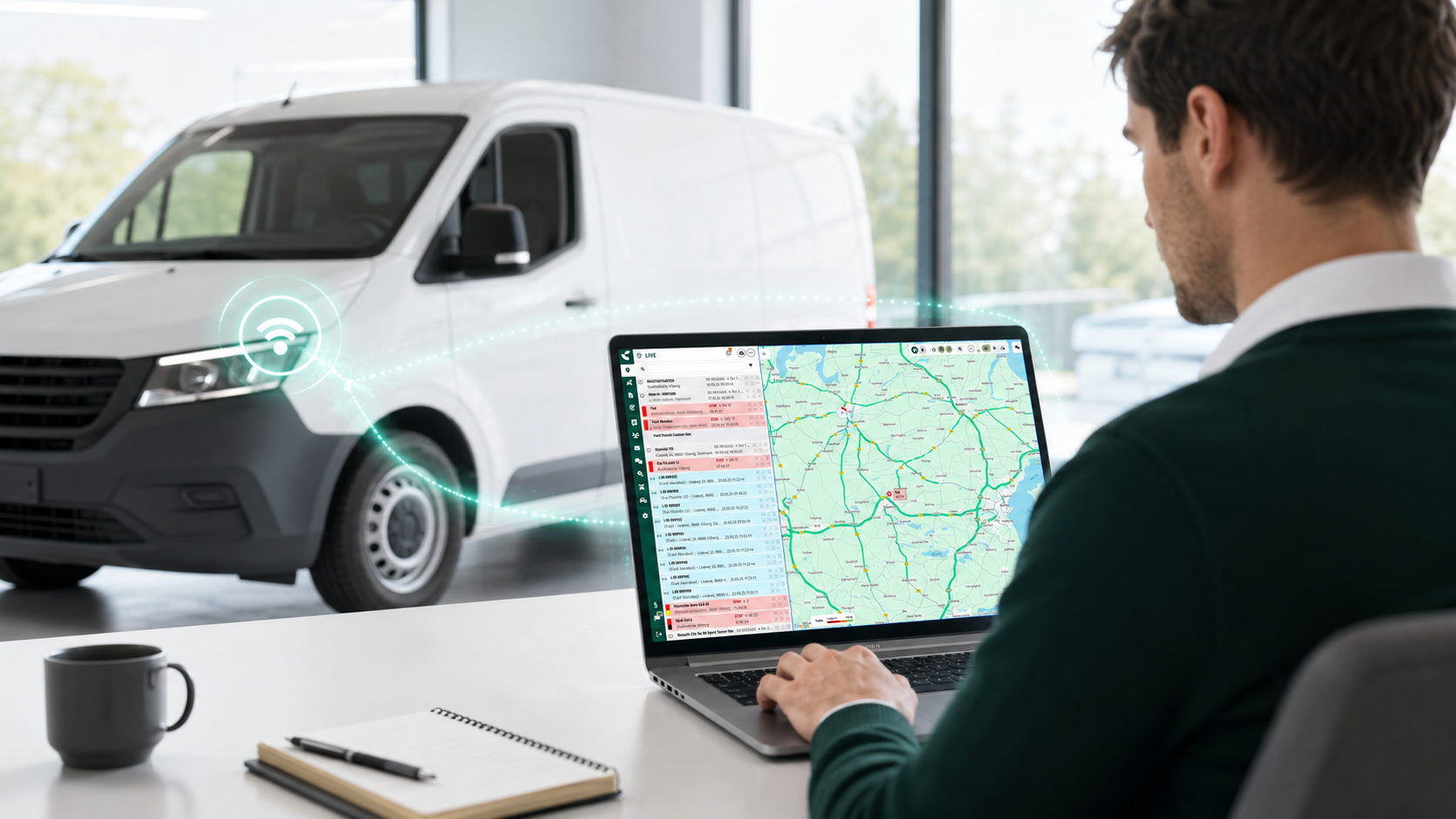
Fleet management is becoming increasingly connected and data-driven. Vehicles can provide more information than ever before, while developments in electrification, automation and data analytics are changing how businesses manage their fleets.
For fleet managers, the challenge is no longer simply collecting data. It is knowing which technology can create real value in daily operations.
Here are five trends that are shaping the future of fleet management.
Trend 1: Electrification is becoming a fleet planning question
Electric vehicles are becoming relevant for a growing number of commercial fleets, but deciding where they fit requires more than simply choosing an electric alternative.
Daily mileage, driving patterns, vehicle utilisation, charging opportunities and operational requirements all influence whether a specific vehicle is suitable for electrification.
Historical fleet data can help businesses identify which vehicles may be suitable candidates and give fleet managers a better basis for planning a gradual transition.
Trend 2: From GPS tracking to connected vehicle data
Fleet management is moving beyond simply showing a vehicle on a map.
Depending on the vehicle and connection, fleet managers can access data such as mileage, fuel or battery level, consumption, vehicle activity and diagnostic information alongside location data.
OEM connections also make it possible to access vehicle data without installing additional tracking hardware in compatible vehicles.
Bringing this information together gives fleet managers a clearer picture of how vehicles are being used and provides better data for planning, maintenance and reporting.
Trend 3: Maintenance is becoming more data-driven
Fixed calendar reminders are not always the best way to manage vehicle maintenance. Two vehicles of the same age can have very different mileage and usage patterns.
Vehicle and mileage data can help fleet managers identify when vehicles are approaching service intervals and plan maintenance based on actual use.
As more vehicle data becomes available, fleet managers can increasingly use that information to identify issues earlier and make maintenance planning more proactive.
Trend 4: More vehicle functions are becoming automated
Fully autonomous commercial fleets are still some way from being part of everyday fleet operations, but vehicles already include an increasing number of driver-assistance and automated features.
For fleet managers, this means that vehicle technology and fleet data are becoming more closely connected. Understanding which features vehicles have, how they are being used and what data they can provide will become increasingly important as fleets modernise.
Trend 5: Fleet Data Will Become Easier to Act On
As fleets generate more data, simply collecting information is not enough. Fleet managers need tools that help identify patterns, exceptions and areas that require attention.
Data analytics and AI have the potential to make large amounts of fleet information easier to interpret – for example by highlighting unusual vehicle activity, changes in consumption or maintenance patterns.
The value will not come from having more data. It will come from making the right information easier to find and act on.
The future of fleet management is about better use of data
Electrification, connected vehicles, automation and AI will continue to change fleet management. But new technology only creates value when it helps businesses solve real operational challenges.
For fleet managers, the key will be turning growing amounts of vehicle data into information they can actually use – to improve planning, understand vehicle utilisation, manage maintenance and make better-informed decisions.
The technology will continue to evolve. The objective remains the same: better visibility and better decisions.
Ready to get more from your fleet data?
EcoMobility brings vehicle data together in one place, helping you understand how your fleet is being used and turn information into actionable insights.